When the Joe Hisaishi concert was cancelled this winter, our family mourned a missed opportunity. As devoted fans of Studio Ghibli films—Princess Mononoke, My Neighbor Totoro, Nausicaä of the Valley of the Wind, and Spirited Away—we have cherished his scores for decades. Hisaishi is to Japanese cinema what John Williams is to Hollywood: a composer whose music shapes and deepens the stories we love.
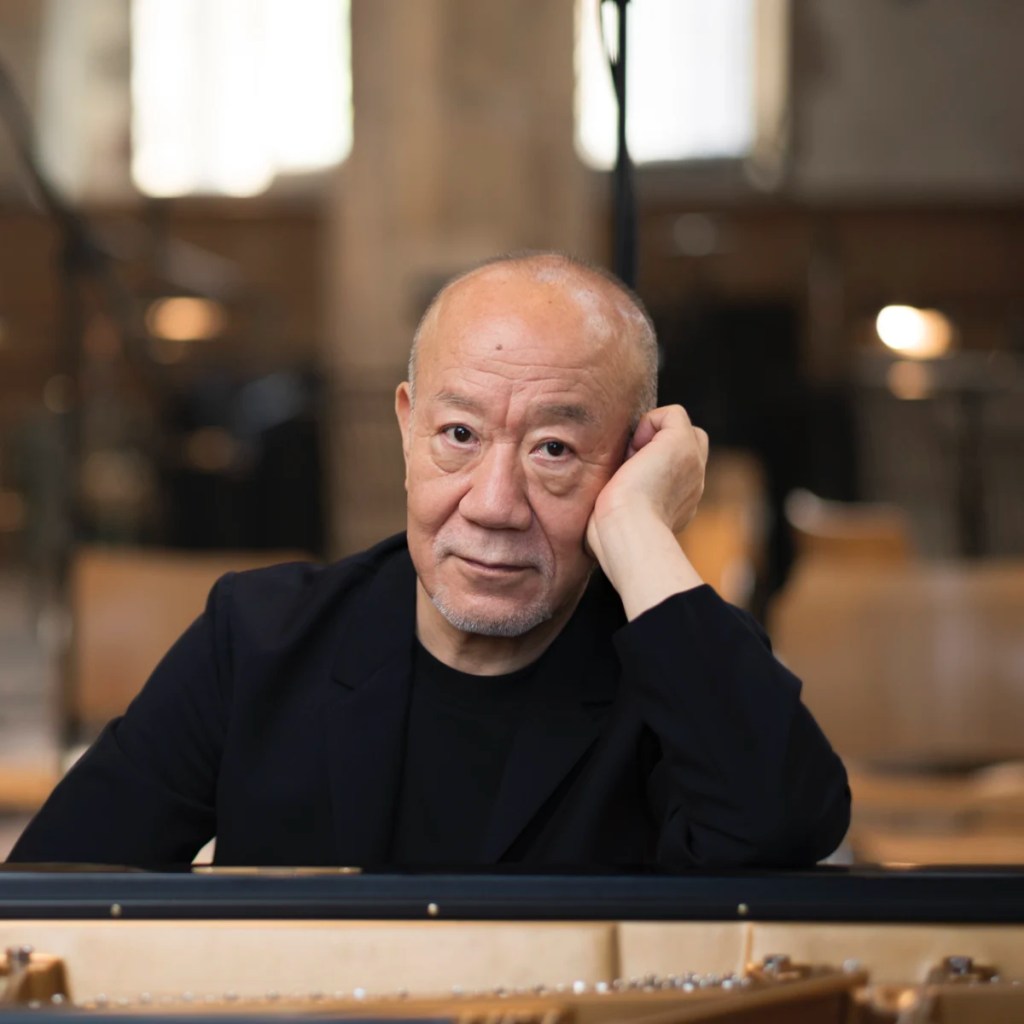
Yet Hisaishi and Williams approach their craft from distinctly Eastern and Western traditions, though both borrow generously from other cultures. Hisaishi is a minimalist, his instrumentation precise enough to convey thoughts, emotions, and moods with haunting simplicity. Now and then, he unleashes the full power of the orchestra. Williams, by contrast, favors bold brass and orchestral grandeur, employing simplicity more sparingly.
We rejoiced to learn that Hisaishi’s health had improved enough for him to travel to the States for tonight’s performance with the Philadelphia Orchestra.
The program included three of his works: Symphony No. 2, Viola Saga, and the Spirited Away Suite. We were most eager for Spirited Away, a score woven into our family’s memory through countless viewings.
As the orchestra assembled, I was struck by the sheer number of musicians and the array of percussion instruments filling the stage. The seating was unfamiliar—twice the usual number of violins, positioned differently than I’d seen before. I wasn’t sure what to expect.
What we received was the concert equivalent of a multi-flavored snow cone on a hot summer’s day: music that refreshed and delighted; melodies brimming with hope; chord progressions that surprised and stirred; pieces that carried us away on shimmering, stringed wings of wonder.
The first movement of Symphony No. 2, titled “What the World Is Now?”, captured our attention from the opening bars, twisting and turning like a dragon in flight. Written during the COVID pandemic, it conveyed Hisaishi’s optimism despite the world’s uncertainty.
The second movement, “Variation 14,” explored a theme through fourteen distinct variations. His compositions breathe with such love and vision that one can’t help but wonder what images filled his mind as he wrote. To me, the theme evoked a malnourished elephant striving to learn the grace of a geisha—though I suspect I’ve missed the mark. I encourage you to listen and let your own imagination take flight.
The third movement, “Nursery Rhyme,” began with the bass section gently plodding through a melody that soothed heart and mind. Somber, thoughtful, and unhurried, the piece gathered momentum as each section of the orchestra joined in a bedtime round, climbing the register to brighter, lighter instruments until the melody twinkled high in the treble clef—only to settle us back into the comfort of dream-filled sleep.
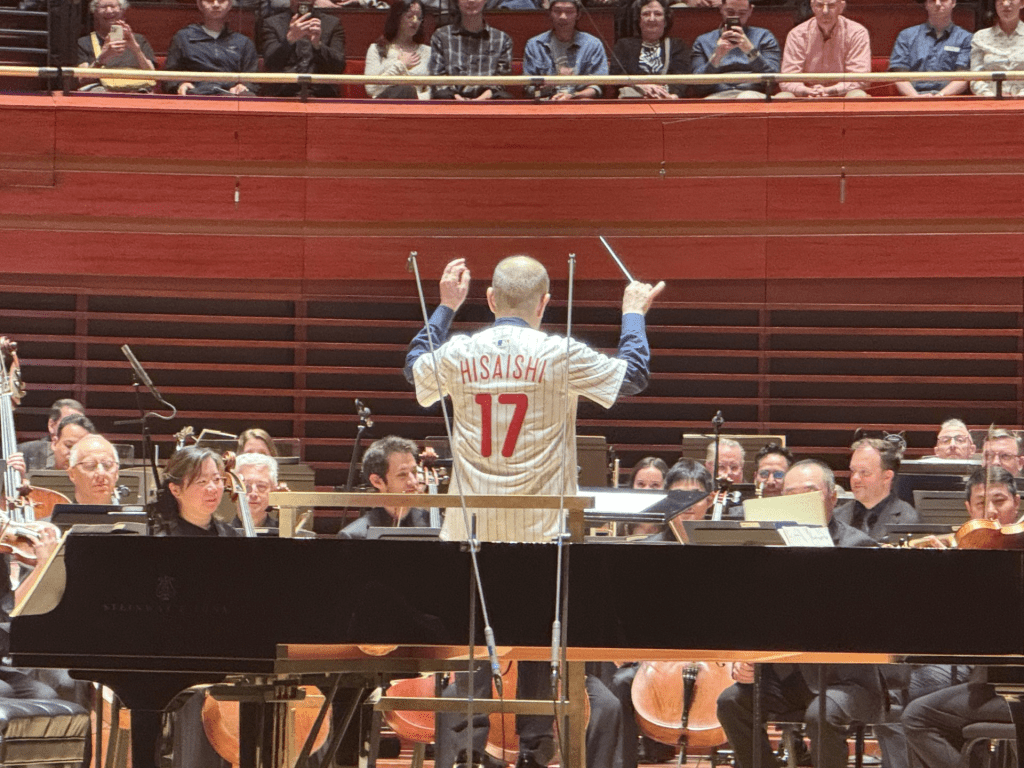
After intermission came Hisaishi’s Viola Saga. It took me a while to warm up to the minor grace notes and accidentals filling the gaps in this piece. At first, the piece was like walking home at night, feeling like one is being watched. Once I started to comprehend this unique take on the instrument’s non-concerto, I felt more at ease. Then it shifted into what I would describe as intense ethereal harmonies outside western musical thought.
The second movement played off the first through extensive arpeggio use, yet lacked the sophistication of the other works this evening.
Lastly, Spirited Away—an animation score masterpiece that should need no introduction, rendered with breathtaking beauty by a world-class orchestra and the composer performing on the piano with a consuming love of the piece. Words fail to convey such moments. Special praise should go to the percussion session for handling an incredibly fast and difficult piece flawlessly.
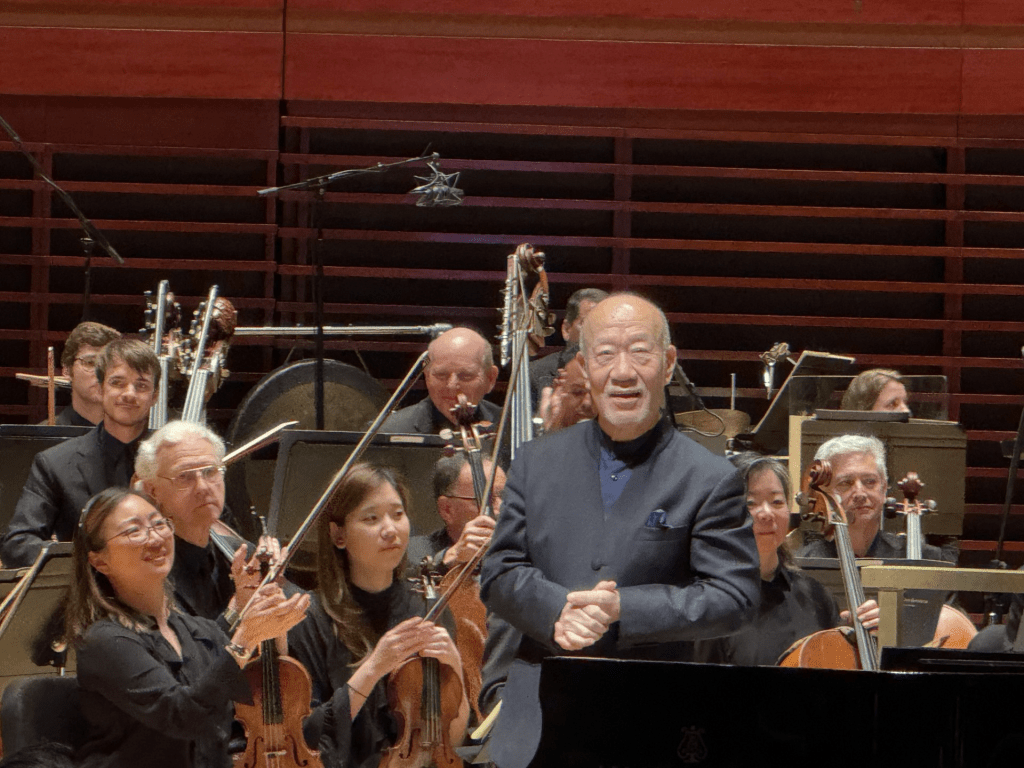
For an encore, Mr. Hisaishi performed one of the themes from his most recent movie score compositions from The Boy and The Heron. Of all of the pieces I hoped he would play as an encore this variation was the top of my list.
For his second encore, he conducted the orchestra as they played one of his pieces, I could not place it, but it might have been from Porco Rosso… another great addition to the evening.
Now and then, a concert exceeds expectations so completely that you leave feeling elated and renewed. Hearing Joe Hisaishi live will remain one of the most joyful classical concerts I’ve ever attended. The evening vaulted this master into my top three favorite living composers. I think I’ll go home now and explore his other works, eager to discover what treasures I have yet to find.
*we were invited to facilitate a feature, all opinions are our own*

 the mommy avenger
Leave a comment