
Walking into the Kimmel Center for the Arts in downtown Philadelphia, we are greeted by the promotional slogan, “125 years of magic.”
As we enter our third season of patronage to The Philadelphia Orchestra, we can attest to many enchanting, transcendent, and captivating experiences. This season, we are looking forward to hearing many new pieces and seeing some old friends.
Tonight, we were reunited with conductor Stéphane Denève and Gil Shaham on violin. Though Stéphane finished his stint as guest principal conductor at the Philadelphia Orchestra last year, he continues to be in high demand, leading St. Louis Orchestra, the New World Symphony, and now as principal guest conductor of the Netherlands Radio Philharmonic.
If some of our modern great conductors working in America were a family, Yannick would be the confident and charismatic older brother, Gustavo Dudamel would be the fiery and introspective second child, and Stéphane would be the lovable, affable third son, and likely his mother’s favorite.
Last time Stéphane visited, we basked in the buoyant, contagious wake of his influence on the orchestra. They tend to play a little looser and free, which lends to a more casual orchestral experience than the precise perfection under Philadelphias’ head. I prefer Yannick but I have some family members who benefit from the bubbly Frenchman. Yannick’s choice to pair him with the programme music of Strauss’ Alpine Symphony is a stroke of genius.
When attending a concert, if you can make it 75 minutes ahead of time, there is a not-so-secret pre-concert conversation with one of the orchestra family. They spend thirty minutes sharing the musical jokes, motifs, patterns, and pictures for the evenings’ works. We love these moments, as they drastically improve the quality of our listening experience.
Tonight’s program included three works. First up was Ravel’s compositional ode to his friend, poet Leon-Paul Fargue. In this short piece, Ravel painted a picture of a small boat rocking on the ocean ebbing and flowing through the different tides of the piece with the sunbeams making appearances in our minds eye. The orchestra began to remind us of its technical range with this small tone poem, preparing us for the later main course of the Alpine symphony.
Next came Violin Concerto No. 1, by Max Burch. This work benefited significantly from his humility; while many composers are incredibly protective of their compositions, Burch sought out the feedback and counsel of numerous professional violinists when moving through over ten different drafts of the concerto. The final work is a crowd pleaser, demanding of the performer, and moving between bravura and pathos boarding on the despair using the instrument is so prone to emote trauma in its natural state. The orchestra backed up Gil Shaham particularly well helping the piece move from depression to triumph.
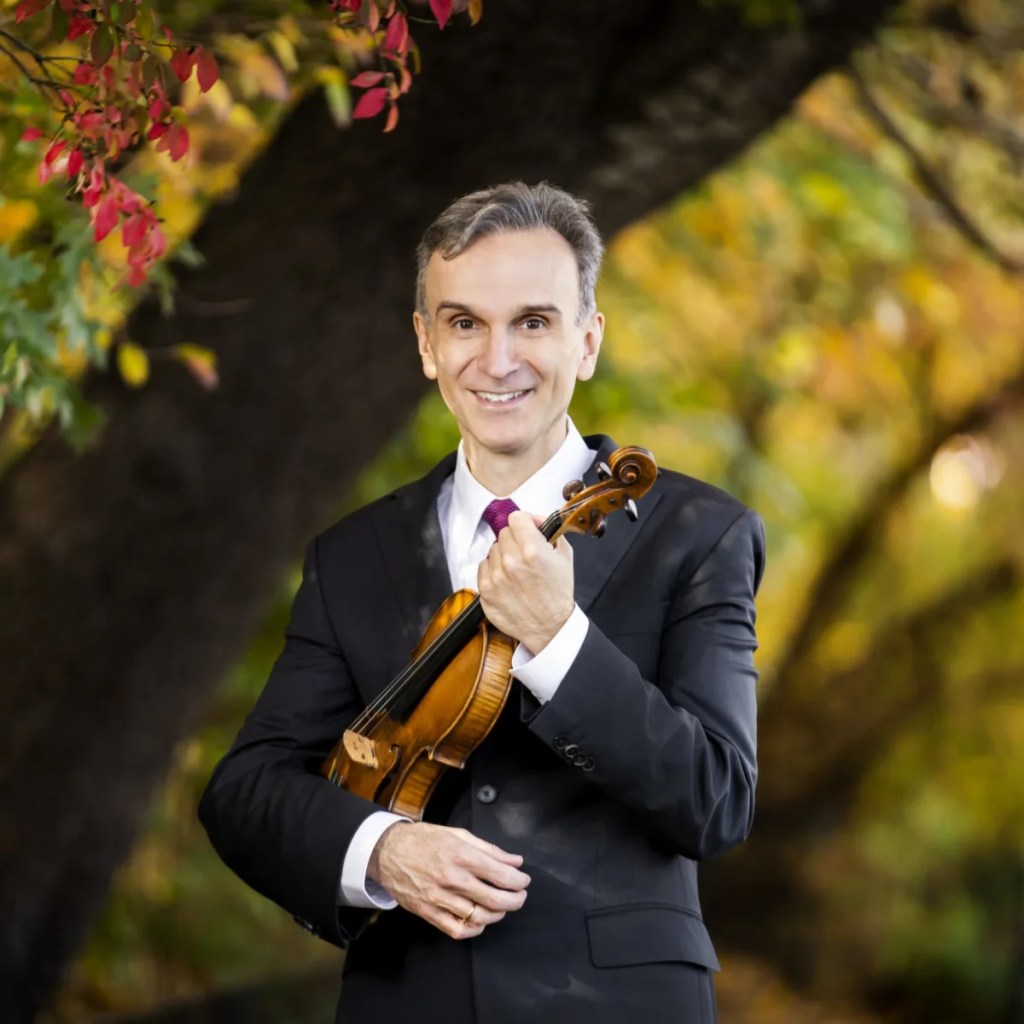
The Stradivarius currently on loan to Gil Shaham is widely considered one of the five greatest sounding violins of all time. Listening to one of the most performed concertos in the concert music repertoire on this instrument by a thirty-seven year master of the craft lived up to the hype. It was magical. Easily the best part of the concert, and it was not even close.
He treated us to an encore after we gave him a well-deserved standing ovation. Playing a technically difficult piece, that showcased his precision and the capabilities of the instrument.
This primed us to walk up the mountain Richard Strauss wrote as part of mourning Mahler’s death. Sadly, this death caused him to question faith and religion, leading him to this composition celebrating “nature” in his attempt to separate God from His creations out of spite. Composed primarily at his chalet in the mountains of Garmish, he walks us up a mountain, by a stream, through a rainstorm, by a field of cows (cowbells played off-stage was a classy touch), before we get lost. Thunderstorms, wind, and other elements each make appearances in the piece. The orchestra presented different themes like various individuals getting lost, but pressing forward. When they arrive at the top, instead of a giant bombastic finish, is treated almost with reverence by a perfect oboe solo.
The orchestra presented this piece as written, but with more optimism than it sometimes receives due to some conductors’ focus on the darker themes. Conductor Stéphane Denève did not dwell in drawn out difficulty, but moved to emphasize the range and capacity of the different orchestral sections.
The musicians stepped up to each of the pieces this evening with confidence and dramatic presence. Excellence breeds excellence and difficult compositions and topics can showcase the true core of a group. This even proves that the heart of the Philidelphia Orchestra is beating strong.

*we were invited to facilitate a feature, all opinions are our own*

 the mommy avenger
Leave a comment