When it comes to a profession’s “Hall of Fame,” there are rarely surprises for those in the know. Individuals who have contributed significantly to their field, helped win championships, or made a difference in their community usually receive accolades and honors in time. The conversation becomes far more interesting—and, need we say, heated—when one starts to debate who the greatest of a generation are or who stands as the greatest of all time in a profession or position.
A conversation about the greatest conductors of all time will undoubtedly include Leonard Bernstein, due to his masterful interpretation of the classical repertoire; Carlos Kleiber, for his intensity, precision, and many flawless performances; Claudio Abbado, because of his purely romantic and lyrical, emotive style; and Arturo Toscanini, who is known for bringing out expressive clarity through strict rehearsal discipline.
In this generation, concert music aficionados are blessed with a variety of “greatest of a generation” candidates. Sir Simon Rattle is as versatile a conductor as any; Daniel Barenboim speaks to the cerebral listener like no other; Susanna Mälkki has made a name for herself in modern music for those who appreciate that genre; Marin Alsop brings an energetic, crowd-pleasing, and informed presence to every concert; Gustavo Dudamel is incredibly popular among casual concertgoers due to his easily-followed conducting style and piece selection; and Antonio Pappano is relentlessly consistent across a massive repertoire. Yet, after another evening in the presence of Yannick Nézet-Séguin, I am fully convinced that he is not only the greatest of this generation but deserves a place among the top 20 greatest conductors of all time.
First of all, no other conductor I have heard keeps the strings so precisely aligned that live concerts sound like artificially edited works. Second, Yannick attracts top-tier musicians to his orchestras, brings in the world’s best soloists, and puts them together in a manner where the whole is greater than the sum of its parts. Third, he is approachable, modest for a conductor, and optimistic, while maintaining exacting standards. Fourth, he is a master of every genre—from opera and classical periods to contemporary music, jazz, and film scores. Fifth, his distinct fingerprint is easily recognizable: precise, with a sweeping dynamic approach that knows exactly when each section must climax or recede. Sixth, he sounds amazing across his many recordings, whether on the Met’s streaming platform or WRTI’s weekly rebroadcasts of Philadelphia Orchestra concerts on Sunday afternoons or Monday nights. Visit him at the Metropolitan Opera or when he conducts the Philadelphia Orchestra to add your voice to this debate.
Tonight’s concert reinforced these beliefs. It began with Sibelius’s pensive Violin Concerto in D minor, Op. 47. This piece demands much of the soloist and is often performed by the world’s finest performers. A personal favorite recording of mine is by Hilary Hahn, who captures the soulful precision of the composition while projecting confidence and artistry. Yannick created a masterful platform of support for a soloist-centric performance.
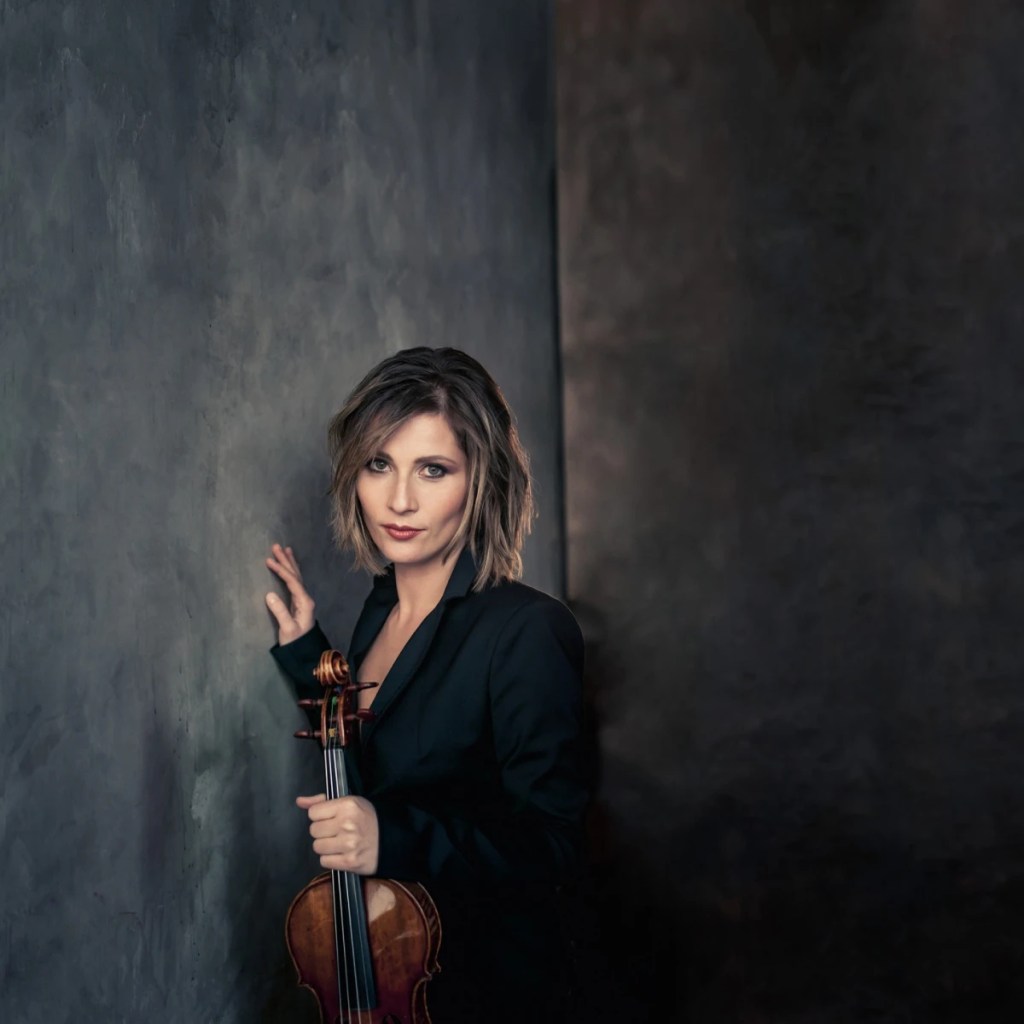
Lisa Batiashvili’s style is truly unique. She brings the warm, precise, lyrical German style from her training, yet infuses it with her Georgian heritage and the passionate, frenetic intensity typical of Eastern European musicians. This was particularly evident during the third movement, where she cut across the strings of the Joseph Guarneri del Gesù violin in a manner befitting a slasher film on a Saturday night at Fright Fest. The result, however, was the opposite of horror: it thrilled the audience to a standing ovation.
For an encore, she played a quietly lyrical composition that seemed to be either a hymn or folk tune, but I could not place it. I enjoyed it as much as the concerto, because it highlighted her ability to make her violin more soulful as it seeped out the notes.
The Philadelphia Orchestra continued to celebrate its 125th anniversary with a concerto they first premiered during their 102nd anniversary season. The piece, originally designed to feature various soloists and orchestral sections, felt more like a sampling menu than a multi-course meal. The percussion section shone the brightest through these solos with fun and fanciful rhythms prancing around the piece until they reached a full comedic horse gallop in the final movement. Aftward the composer took a bow on stage.
The evening concluded with a piece whose background story describes the music perfectly. From the program: “Tchaikovsky was fascinated by the critic Henry Laroche’s suggestion of an opera on the story of Paolo and Francesca, as told by Dante in The Divine Comedy…. ‘This is from Dante, the Second Circle of Hell,’ Tchaikovsky wrote in his preface to the printed score of his symphonic fantasia. ‘There one sees sensuality chastised, the punishment for which is to be tormented continually by the most brutal whirlwinds, in deep darkness.’… The work that resulted is one of the composer’s most full-voiced and subjective tone poems, full of thrilling modulatory disorientation and an obsessive working out of themes that borders on bombast.” Cut from the same cloth as Swan Lake and Romeo and Juliet, the orchestra performed this piece with a lustful guilt that would cause Puritans to flee in horror. In other words, it was great—a fitting piece for this spooky season.


 the mommy avenger
Leave a comment