Disney’s Fantasia in Concert: The Philadelphia Orchestra
It is difficult to imagine the trajectory of concert music in the public consciousness without Walt Disney’s Fantasia. For many who lived through World War II, the film served as a first encounter with classical music—a visually arresting gateway to repertoire that might otherwise have seemed distant or inaccessible. Disney’s original vision was ambitious: a continuing series of Fantasia films released every few years, each pairing animation with new works from the classical canon. Though the concept ultimately yielded only one sequel in 1999, the cultural impact of the original remains undeniable.
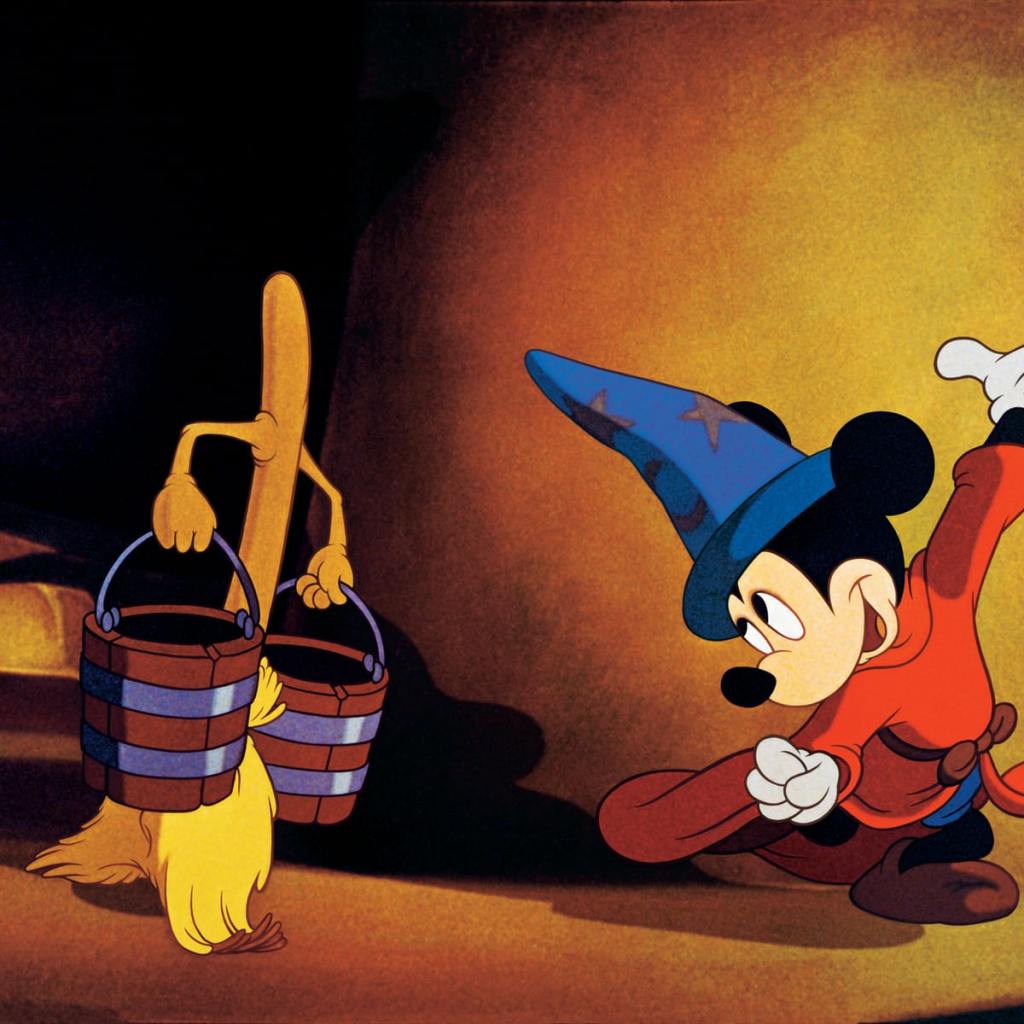
While musicians often debate the merits—or distractions—of animated interpretations of serious music, there is little controversy surrounding Fantasia’s musical selections. The film draws from some of the most enduring works in the orchestral repertoire: Bach’s Toccata and Fugue in D minor, Dukas’s The Sorcerer’s Apprentice, Stravinsky’s The Rite of Spring, Beethoven’s Pastoral Symphony, Ponchielli’s Dance of the Hours, Mussorgsky’s Night on Bald Mountain, and Schubert’s Ave Maria. Each of these pieces not only showcases the immense diversity within the classical genre but also highlights the extraordinary ability of music to convey emotions, stories, and ideas.
For audiophiles, however, modern home releases—whether via streaming, Blu-ray, or DVD—can feel underwhelming. Though competently performed by the Philadelphia Orchestra in the original release, the recordings lack the depth, dynamic range, and visceral impact that the music demands. When the Philadelphia Orchestra announced a live Fantasia performance, the opportunity to hear so many iconic works in a single evening—performed by one of the world’s premier orchestras—was irresistible.
The concert opened without visuals, as guest conductor Aram Demirjian led Bach’s Toccata and Fugue in D minor. This decision proved inspired. Free from the film’s imagery, the audience was able to focus entirely on sound. The orchestra delivered an expressive and finely balanced performance, with the resonant power of the brass and low strings set against the agility of the woodwinds and violins. The clarity and precision on display immediately established the Philadelphia Orchestra’s unmistakable sonic identity—rich, cohesive, and commanding. Each note resonated within the concert hall, creating an enveloping soundscape that drew listeners into the heart of the music.
When the visuals were introduced later in the program, the synchronization between image and sound was often striking. Animated sequences paired with selections such as Tchaikovsky’s Nutcracker excerpts and Beethoven’s Fifth Symphony demonstrated how effectively Disney’s imagery can heighten musical drama when handled carefully. Moments of suspense and surprise—particularly in the more explosive passages—elicited genuine reactions from the audience, underscoring the enduring emotional pull of these works. The children’s laughter and the audible gasps from the crowd during specifically intense moments highlighted how deeply engaged the audience was with both the music and the accompanying visuals.
After intermission, Ponchielli’s Dance of the Hours unfolded with its characteristic absurdity and charm, buoyed by crisp articulation and rhythmic vitality from the orchestra. One of the evening’s most evocative moments came during the restored Clair de Lune sequence, which had been cut from the original 1940 film. The moonlit landscape, rendered in soft motion, was exquisitely matched by shimmering mallet percussion and harp arpeggios that floated above the strings, creating an atmosphere of quiet, luminous introspection. This restored piece transported the audience into a serene and dreamlike space, allowing for a moment of collective reflection that is often rare in such concert settings.
Beethoven’s Pastoral Symphony followed, offering a calmer interlude that, while competently executed, lacked the narrative immediacy of some surrounding selections. Its idyllic themes painted a verdant landscape, yet the performance did not quite capture the full emotional depth that Beethoven intended, leaving some audience members yearning for a more gripping rendition. The evening concluded powerfully with Dukas’s The Sorcerer’s Apprentice, a fitting finale that showcased the orchestra’s dramatic range and precision. Notably, this piece, synonymous with Fantasia, was actually performed by the Hollywood Orchestra for the original soundtrack rather than the Philadelphia Orchestra, which, under Leopold Stokowski, recorded the rest of the songs in 1939. This historical context added an additional layer of appreciation for the performance, linking the past with the present.
Unfortunately, Mussorgsky’s Night on Bald Mountain—one of the film’s most iconic sequences—was missed, leaving a small but noticeable absence in an otherwise compelling program. This piece, with its haunting melodies and robust orchestration, would have served to elevate the experience further, weaving a richer tapestry of sound and imagery that defines the essence of Fantasia.
Still, Fantasia in concert reaffirmed the enduring relevance of Disney’s experiment. When paired with orchestral excellence of this caliber, the marriage of animation and classical music transcends novelty, reminding audiences why these works continue to resonate across generations. The collective experience of witnessing a live orchestral performance, coupled with the breathtaking animation, created a unique atmosphere that bridged the gap between history and contemporary artistry, ensuring that the legacy of Fantasia continues to inspire new audiences. Through this concert, the symbiotic relationship between music and visual art was not only celebrated but also reinforced as a vital part of the cultural landscape.


 the mommy avenger
Leave a comment