Gustav Mahler’s Resurrection Symphony remains one of the most monumental works performed in concert halls today. Six years passed from start to finish of the composition, which premiered in Berlin in 1895. This work requires a full orchestra, talented soloists, and a large chorus to present a universal aspect of the Christian experience: death, followed with hope following doubt towards redemption and resurrection. In its entirety, the piece takes over eighty minutes to perform, and this evening The Philadelphia Orchestra, Philadelphia Symphonic Choir and soloists Ying Fang and Joyce DiDonato proved equal to the brilliance of this composition.
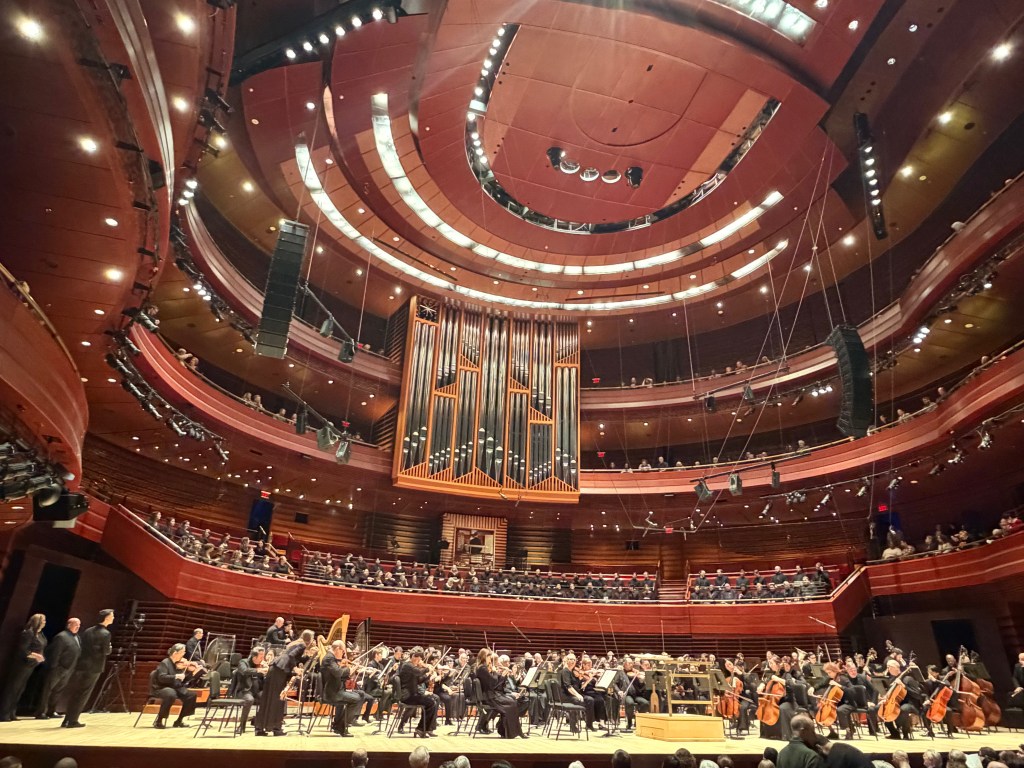
We have come to expect such under the baton of Yannick Nézet-Séguin, especially when paired with talents such the multiple GRAMMY-Award winning Joyce DiDonato and Juilliard’s multiple award winning Ying Fang. Joe Miller, a professor of conducting and ten-year conductor of the Philadelphia Symphonic Choir often combines forces with Yannick and after tonight’s performance we are looking forward to their next partnership in April for Mozart’s requiem.
Mahler wrote the first movement of this piece quickly, originally titled Todtenfeier (Funeral Rites). He then struggled to complete the rest of the piece. The attempts that stuck came five years later when he wrote the next two movements, a gentle andante inspired by Austrian folk dance tradition, then a scherzo derived from a poem about St. Anthony preaching to the fishes.
The elusive but potent change occurred a year later when attending the funeral of conductor Hans Von Bulow. During the services, the choir sang the hymn “Resurrection” based on the poem by Friedrich Gottlieb Klopstock. Mahler then realized his peice began with death and mourning, then conclude with a vision of resurrection and spiritual renewal.
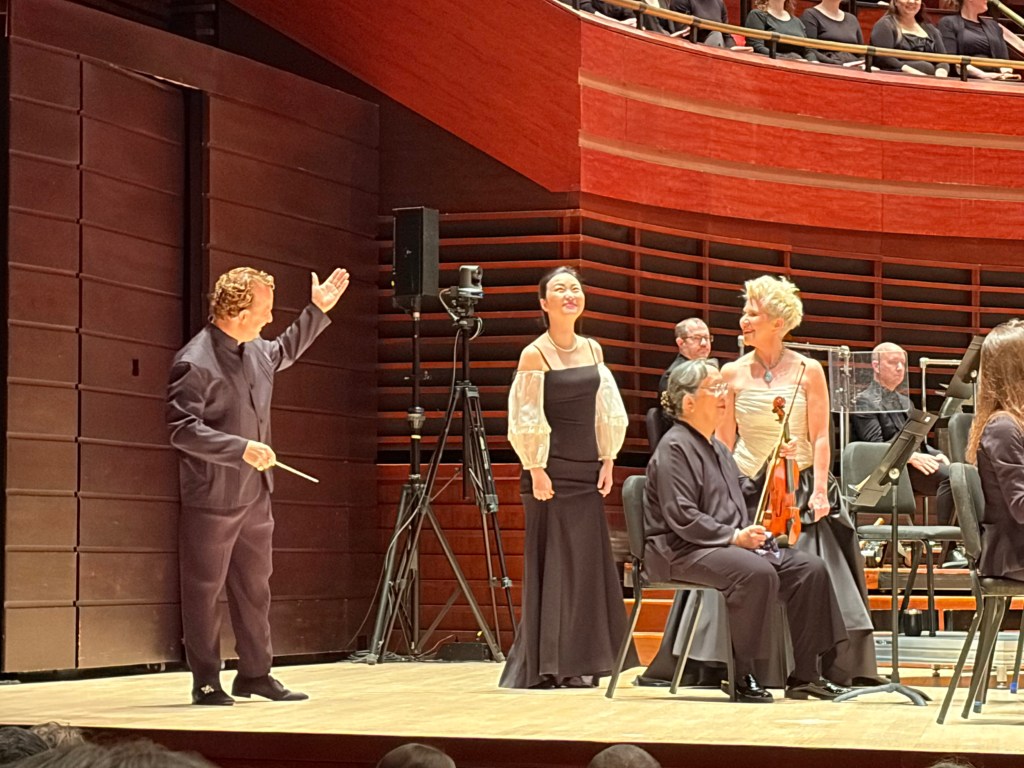
This evening’s performance led to a nearly nine minute, and completely earned, standing ovation. The performance moved the audience with the sheer amount of emotion the performers dumped into the piece. Though all involved deserve praise, there were a few moments that touched us personally:
First, the harpists’ beautiful and layered portrayal of hope in the second movement, moving from death to what may come thereafter.
Second, Ms. DiDonato’s warm, clear, and captivating first line of the fourth movement drew us in. Free of ornamentation and Wagnerian operatic vibrato, her complete control came out smooth and simple, filling the cracks in our heart generated by the thoughts of death from the first movement.
Third, when listening in-person, the brass section blending and reverberating sounds echoed with a near the magical effect throughout the hall. It created a sonic vision of this life and the greater spiritual plain that exists. One could feel the truth that we are spiritual beings traversing a mortal experience on a greater journey.
Fourth, the way the flautist and orchestra blended when it served as the composition’s focal point of was absolutely stunning. Likewise the harmony and tonal quality of Ms. Fang’s portion wove her lines in-between, around, above, and beneath the orchestra presented an elevated approach to her performance.
When Ms. DiDonato and Ms. Fang sang together, it was simply astounding. Add in the organ and choir, and it becomes a core musical memory. The audience certainly thought so, exuberantly thanking the orchestra.
We have said it before; if you visit the greater Philadelphia area, and don’t choose to catch the orchestra live, you may miss out on an experience of a lifetime. Such occurred tonight.
Thank you to all the performers and those behind the scenes who made something extra special to fill our minds.
*we were invited to faciliate a feature, all opinions are our own*
 the mommy avenger
Leave a comment