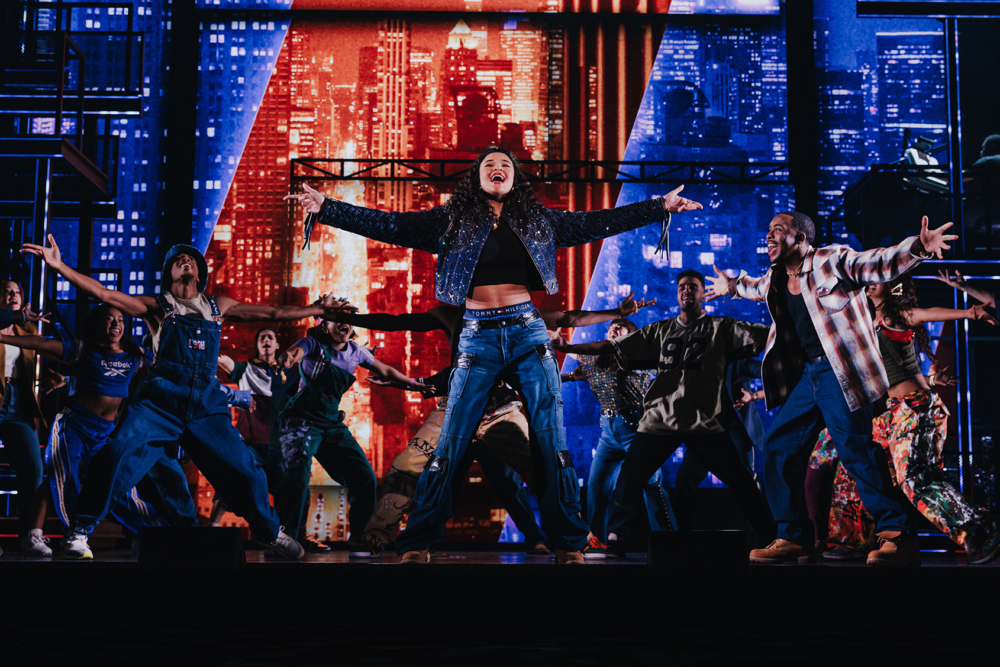
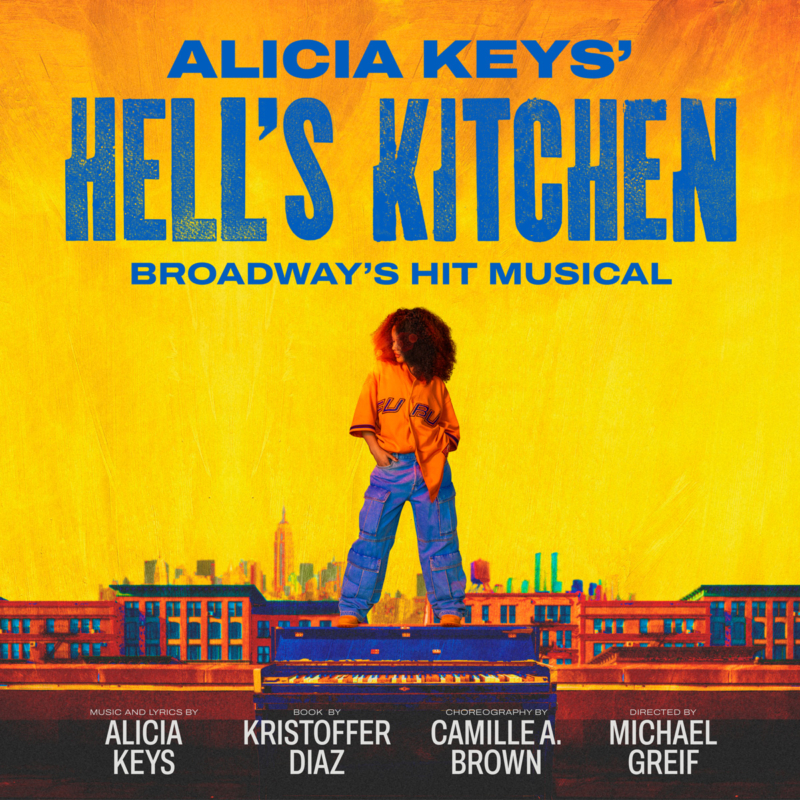
I have to be honest with you before I say anything else: I did not know much about Hell’s Kitchen going in. I knew it had Alicia Keys’ name attached to it, I knew it had won Tony Awards, and I knew the marquee was up at the Eccles. That was about it. No expectations, no preconceived notions, nothing. I just showed up.
Friends, this show snuck up on me in the best possible way.
Here’s the setup: Ali is seventeen, living in a cramped apartment in the Manhattan Plaza building in the Hell’s Kitchen neighborhood of New York City, with her fiercely protective single mom, Jersey. Ali wants freedom. She wants passion. She wants to be seen as her own person instead of her mother’s daughter. Jersey, meanwhile, is doing everything she knows how to do to keep her daughter from repeating her own mistakes, which of course is exactly the thing that makes Ali want to run straight toward them.
Into this pressure cooker of a mother-daughter relationship walks Knuck, a young drummer Ali falls for, and Miss Liza Jane, the building’s resident pianist who becomes something far bigger in Ali’s life than a music lesson. And hovering at the edges of it all is Davis, Ali’s father, a musician himself, in and out of her life in a way that has clearly left a mark on both Ali and Jersey.

It is a coming-of-age story, but it is really a story about the people who shape us, imperfectly, and how we find our own voice inside all of that noise.
What got me the most, sitting in that theater, is knowing how much of this is drawn directly from Alicia Keys’ own upbringing in Hell’s Kitchen. This is not a generic jukebox musical built around a catalog of hits. It’s a woman handing you her childhood, her neighborhood, her mother, her own complicated road to figuring out who she was going to be.
And what struck me is that none of the relationships in this show are tidy. Jersey is not simply “the overprotective mom.” Davis is not simply “the absent father.” Knuck is not simply “the first love.” Every single relationship in Ali’s life is layered with love and disappointment at the same time, sometimes in the very same scene. That felt true to me in a way a lot of theater doesn’t bother to be. Our families are not clean storylines. They are messy and loving and frustrating, often all at once, and this show trusts that mess enough to put it on stage instead of smoothing it over. It made me think about my own people — the ones who have shaped me even when, maybe especially when, it wasn’t easy between us.
If there is a heart to this show beyond the mother-daughter relationship, it is Miss Liza Jane. She is the neighbor down the hall who happens to be a piano teacher, and when Ali wanders into her practice room, something shifts. Miss Liza Jane doesn’t just teach Ali scales. She teaches her that she comes from a legacy, that music is bigger than herself, and that the piano can be a place to put everything she doesn’t have words for yet.
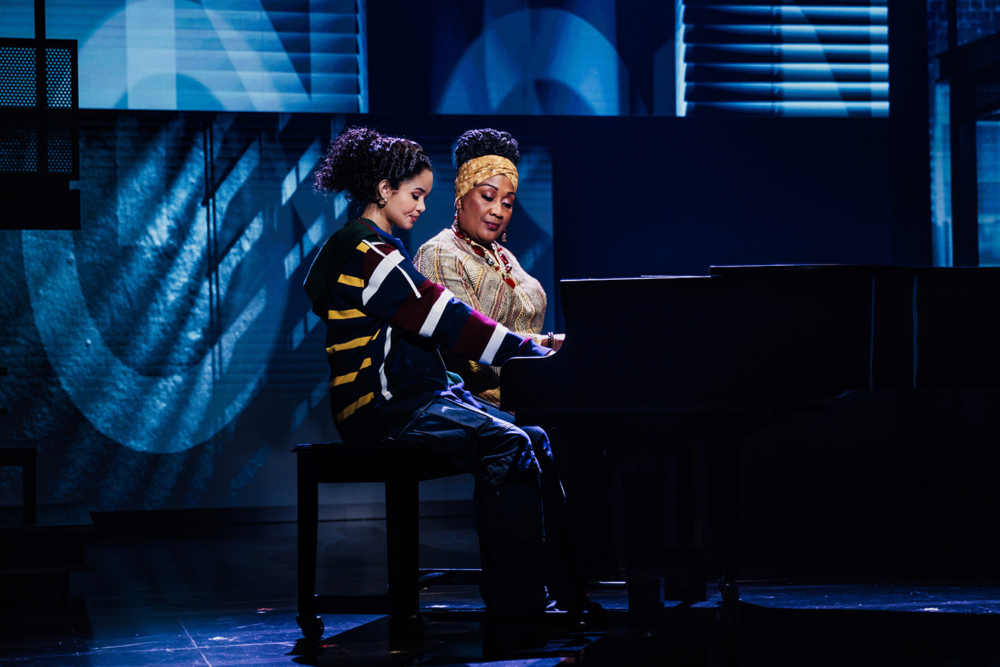
This is the kind of mentorship so many of us hope our kids stumble into — a grown-up outside the family who sees something in a teenager before that teenager can see it in themselves. Watching Ali find her power and her purpose through this relationship, watching her go from a girl throwing tantrums in the hallway to a young woman who has found the thing that is truly hers, was genuinely moving. It is a beautiful reminder that sometimes the person who changes the whole trajectory of your life is not a parent at all. Sometimes it’s the neighbor with the piano.
I need to talk about Kennedy Caughell’s performance as Jersey, because she was a powerhouse. She plays a single mother trying to hold everything together with white knuckles, terrified of watching her daughter make the same choices she did, and Caughell brings so much heart and vocal power to every single moment of it. Her big numbers landed like gut punches, and her quieter scenes with Ali were just as strong. She made Jersey’s fear and her fierce love for her daughter feel completely real, imperfections and all. This is a mother who is doing her absolute best with a broken heart of her own, and Caughell makes you feel every bit of it.
And then there is Maya Drake as Ali. I found out afterward that this young woman just graduated high school and that this tour is her national Broadway debut, and I genuinely could not believe it watching her on that stage. She carried this entire show — the fire, the awkwardness, the yearning, the growth — with a believability that performers twice her age would envy. Her voice has real power behind it, and she brought so much heart to Ali’s journey from a frustrated teenager to a young woman who has found her own voice, quite literally.
Desmond Sean Ellington, who plays Ali’s father Davis, was every bit as talented. His voice is incredible — rich, controlled, full of feeling — and he brought real complexity to a man who loves his daughter but has hurt the people around him too. His scenes opposite both Drake and Caughell had real weight to them, and his vocals were some of the strongest of the night.
The ensemble deserves so much credit here too. The singing and the dancing throughout this show were fantastic, full of energy and precision, and they built out the world of Manhattan Plaza so vividly that the building itself started to feel like a character. And the music — this is an Alicia Keys score, so of course the music was great, but what struck me is how well it carried the actual story forward instead of just decorating it. Every big emotional turn had a song attached to it that made the moment land even harder.
Here is what I did not expect: how much this show made me miss my city. I have spent so much time in Hell’s Kitchen myself, and this production captures that neighborhood — the noise, the grit, the community packed into old apartment buildings, the way art and music and struggle all live right on top of each other there — so well that New York practically becomes its own character in the story. Sitting in the Eccles Theater in Salt Lake City, I found myself homesick for streets I know by heart. That is not something I expected from a Tuesday night at the theater, and it is a real testament to how specific and lived-in this world feels on stage.
This is a very limited engagement, friends, so do not wait on this one. Hell’s Kitchen is playing at the George S. and Dolores Doré Eccles Theater in downtown Salt Lake City through Sunday, July 12, 2026. You can get your tickets here.
The show runs about two hours and thirty-five minutes, including one intermission, and it’s recommended for ages eight and up, with some strong language and mature themes to be aware of if you’re bringing the family.
I went into this show with zero expectations and walked out completely moved by it — by the music, by the performances, and honestly, by how much it made me think about my own imperfect, complicated, deeply loving relationships. If you’re anywhere near Salt Lake City before this run wraps, go remember where dreams begin.
*we were invited to facilitate a feature, all opinions are our own*




Leave a comment