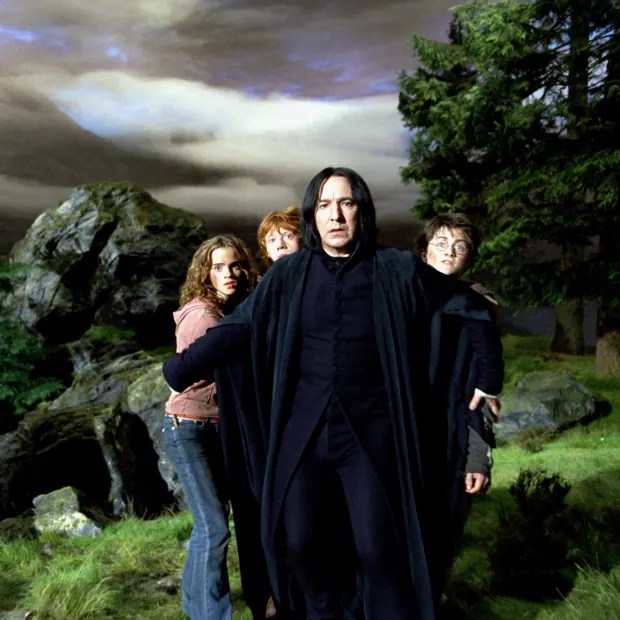
This evening we relished the opportunity to hear the Philadelphia Orchestra perform one of the most beloved film scores in modern cinema: Harry Potter and the Prisoner of Azkaban.
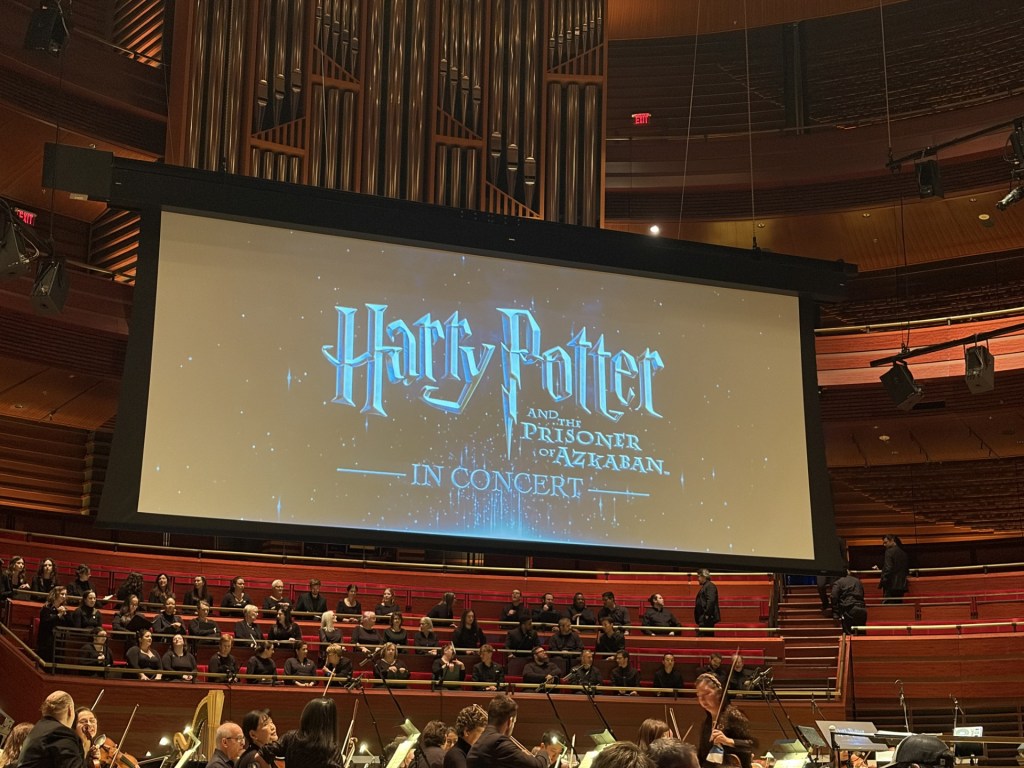
Opportunities to watch a film while hearing its score performed live are a wonderful treat. Concerts such as these introduce many people to the extraordinary sound of a live orchestra while providing familiar and approachable music that invites them into the experience.
Yet tonight’s performance reminded me of something more. After seeing the film with my spouse when it came out I said, “Can you believe the music?” For me, it overshadowed the movie itself. More importantly, it demonstrated how the Harry Potter series became one of the rare film franchises that allowed multiple composers to leave their artistic fingerprints on the same musical world. The story behind that achievement makes the score even more fascinating.
When Chris Columbus directed the first Harry Potter film, the filmmakers faced a considerable challenge. They were introducing audiences to a fictional world filled with moving staircases, enchanted objects, magical creatures, flying broomsticks, and a school that seemed to have stood for centuries. The music had to make that world feel magical without becoming whimsical to the point of parody.
John Williams was uniquely suited to the task. Throughout his career, he had repeatedly demonstrated an ability to create memorable musical identities for unfamiliar worlds. Consider four of his most celebrated scores. Star Wars used recurring themes to give characters, ideas, and locations distinct musical identities. Jaws demonstrated how a remarkably simple motif could generate extraordinary suspense. Superman established a heroic character through a bold and instantly recognizable theme. Jurassic Park blended wonder, grandeur, and danger to accompany a world newly revealed to humanity.
With Harry Potter, Williams did not merely compose background music. He created a musical language. The first two films drew heavily from classical traditions and captured the childlike wonder, mystery, and playful enchantment that Columbus envisioned.
Everything changed with the third film.
When Mexican filmmaker Alfonso Cuarón assumed directing duties for Harry Potter and the Prisoner of Azkaban, he wanted the series to mature. He altered elements of the school’s visual design, changed the costume aesthetic, shifted the color palette, and prepared audiences for what he believed would be crucial to the franchise’s success. The children were growing up, the story was becoming darker, and the film needed a musical voice capable of growing alongside them.
Rather than replacing the composer to ensure his plan, Cuarón shared his vision with Williams. Together, they accomplished something many coming-of-age franchises have struggled to achieve. The films matured with their characters. Without their work, I do not believe the series could be what it is. The third book and movie are the hinge the rest of the franchase rests on, but that is a different discussion than we have time for now.
Back to the score, Williams moved away from the predominantly sweeping and romantic orchestral style of the first two films. He experimented with jazz influences, Renaissance-inspired instrumentation, unconventional choral writing, and more adventurous harmonic language. Remarkably, he achieved this without abandoning the musical identity he had already established. The score remained unmistakably Harry Potter while sounding dramatically different from what came before.
In doing so, Williams demonstrated a principle that would later become common in major film franchises. A musical series could evolve without losing its identity. Instead of treating each installment as a different movement of the previous score, composers could approach new entries as variations on a theme. This allowed the music to mature organically alongside the story.
Where the first two scores painted musical portraits of wonder, discovery, friendship, and nostalgia, the third introduced mischief, mystery, secrecy, injustice, urgency, and darkness. Later composers, including Patrick Doyle, Nicholas Hooper, and Alexandre Desplat, would continue that process of development. The final scores in the series sound very different from the first two, yet the family resemblance remains unmistakable. Though each composer brought a distinct voice, the foundation Williams established continued to shape the musical world of Harry Potter.
The Philadelphia Orchestra, as always, performed magnificently. Yet this particular concert highlighted something uniquely special. Hearing the score apart from the distractions of dialogue and visual spectacle revealed just how much of Harry Potter’s emotional journey is carried by the music itself. What might easily be dismissed as accompaniment proved once again to be one of the series’ greatest achievements. The magic was not only on the screen. Much of it was in the orchestra pit all along.
This evening I realized how much of the movie’s score was omitted from the album release. The majority of the movie had accompaniment. This made the silences far more pointed with the live orchestra. The silly effects stand out far more. The sweeping dramatic moments swell larger than the Blu-ray or steaming edits allow.
All of this made the movie breathe deeper. When we first see the grim there is notable suspense. Marge comes across more comically. The violin themes at the Leaky Cauldron moved the emotional weight of the scenes. The Buckbeak narrative alternated between internal-screaming-levels of suspense and moments of exaltation. The motifs for each character become noticeable particularly the wood flute that accompanied Sirius through the piece. The choir’s presence adds significant moments of somber poignancy.And then the ticking and time-turning score! Throwing our heartbeats into commotion even though we have seen the movie a dozen times before.
As the credits rolled the orchestra treated us to the entire thematic reprise that glued us to our seats until the very end.
Watching this movie with the Philidelphia Orchestra felt like watching an entirely new movie. I wish I could thank the musicians individually for casting a musical spell that brought back the magic this music captured when I first saw it.
Bravo.
I hope I never take for granted the depth of talent this orchestra has curated and shares. Look at the schedule and align your visit to Philadelphia with the orchestra’s performance. To us it is as simple a decision as seeing a show on Broadway when you visit New York.
*we were invited to facilitate a feature, all opinions are our own*


Leave a Reply