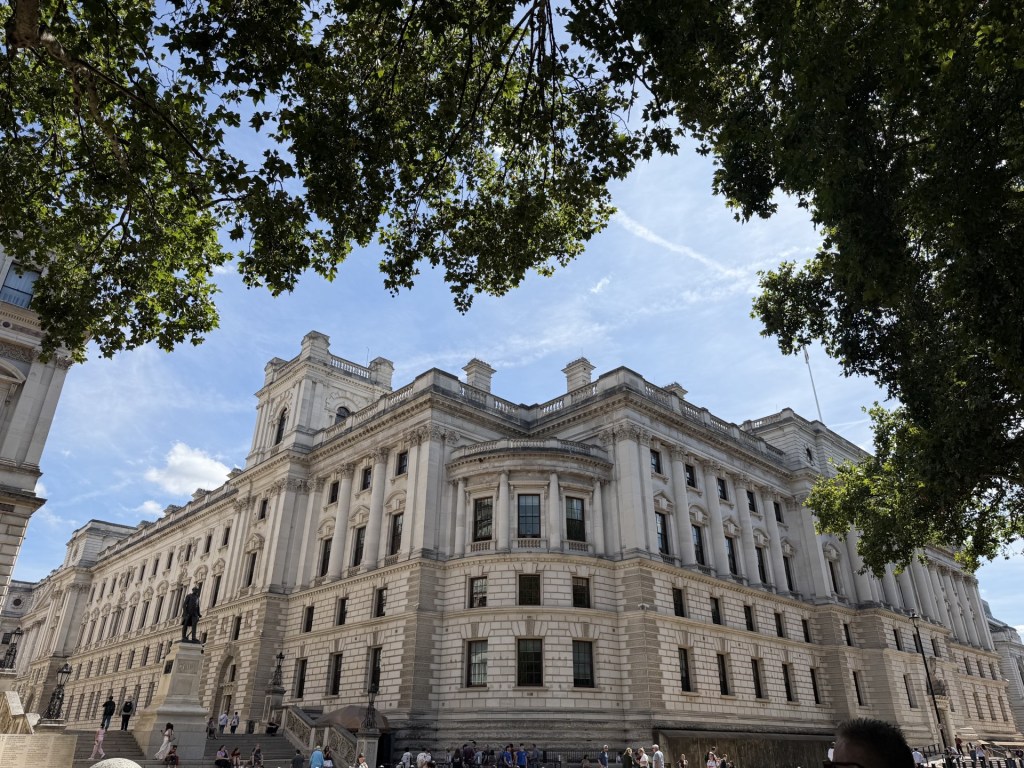
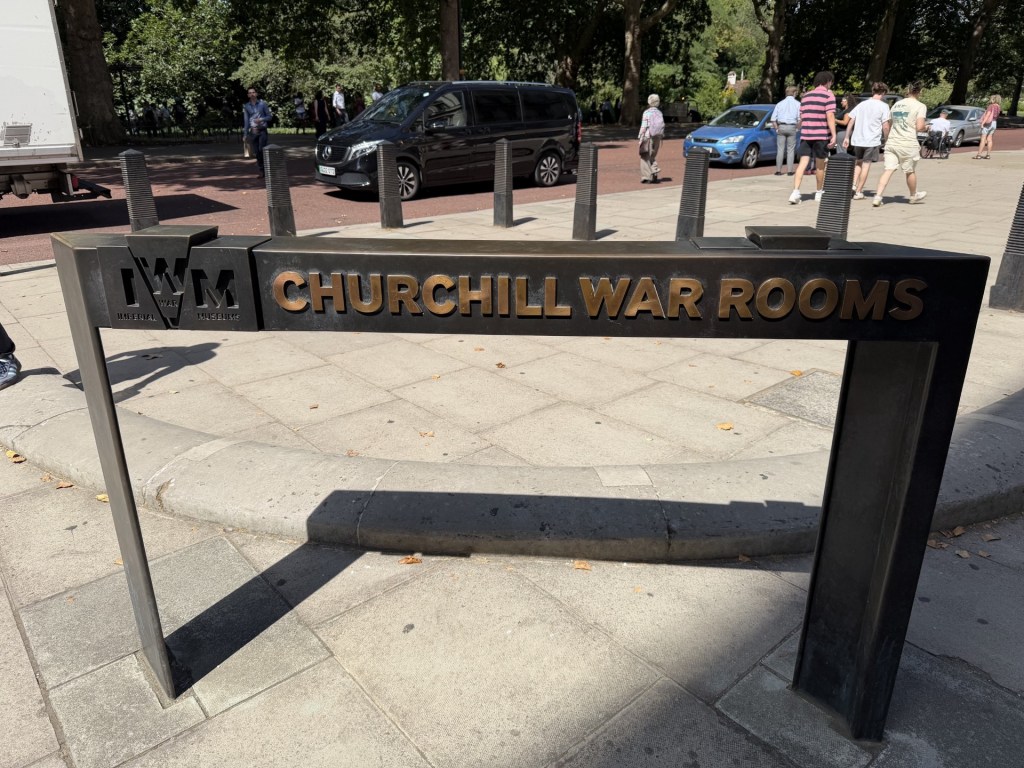
If you know me, you know I love a good history stop when we travel — I’m always the one steering us toward the museum or the old building with a story. So when we were mapping out our London itinerary, there was no version of this trip where the Churchill War Rooms didn’t make the cut. This was one of the stops I was most excited for — the actual underground headquarters where Britain ran the Second World War.
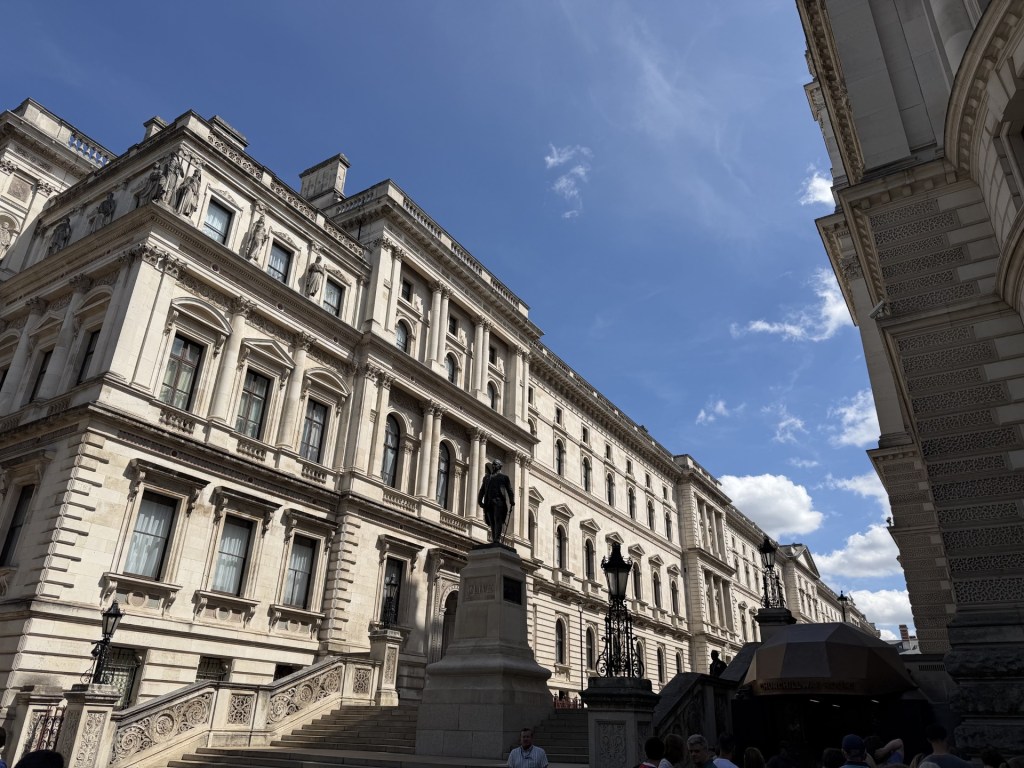
Quick version, because it’s honestly wild: tucked beneath the streets of Westminster, under about 12 feet of concrete and steel, sits a maze of basement offices known as the Cabinet War Rooms. This is where Winston Churchill and his top ministers and military chiefs ran the entire British war effort — meeting, planning, and making the calls that shaped the course of the war, especially during the terrifying nights of the Blitz. The War Cabinet met here 115 times, and the whole place ran around the clock until the war finally ended in August 1945. After that, the doors were shut and the rooms basically sat frozen in time until they opened to the public years later. Today you can walk through them almost exactly as they were left.

What makes this place so special is that it isn’t a recreation — it’s the real thing, left almost exactly as it was. You wind through the actual corridors and offices where real people lived and worked underground for years, and every room has its own little story. There’s the Cabinet Room, where Churchill sat opposite his Chiefs of Staff in what was practically designed for confrontation — the tables are arranged so the heads of the Army, Navy, and Air Force sat eyeball to eyeball with the Prime Minister, and Churchill was famous for pushing them hard. Standing in there, you can practically feel the tension. There’s the Map Room, the military nerve center of the whole operation, staffed around the clock, where officers tracked the war’s progress on huge wall maps. There’s Churchill’s bedroom-office, where he slept, worked, and even broadcast speeches to the nation from underground. And built right into the complex is the Churchill Museum, which takes you through his entire 90-year life — not just the war years, but his whole remarkable, complicated story, told through personal items and artifacts.

Walking through it, you get this strange, quiet feeling of stepping into a moment that’s been paused since 1945. Nothing about it feels staged, and that’s exactly what makes it so powerful.
Honestly, the fun little details are what made the visit for me — the human stuff tucked into all that seriousness. Staff working down there for weeks at a time actually had to strip down, put on goggles, and sit in front of sun lamps just to get a little vitamin D — one person forgot her goggles and nearly went blind. Wild, right? Sugar was rationed, so one officer hid his stash in an envelope at the back of a drawer, sneaking little bits when he needed them, and nobody found it until the 1980s — such a relatable, sneaky little move. Somewhere on one of the huge wall maps, there’s a tiny pencil caricature of Hitler that someone drew for a laugh, because even in the middle of a world war, someone squeezed in a little humor. One of the old phones on display has a warning printed right on it about keeping conversations secret, such a fun little physical reminder of how high the stakes were. And Churchill himself broke his own rules — he gave several wartime speeches from his underground bedroom and loved going off-script mid-broadcast. Anyone else would’ve gotten cut off; Churchill was the one person allowed to get away with it.
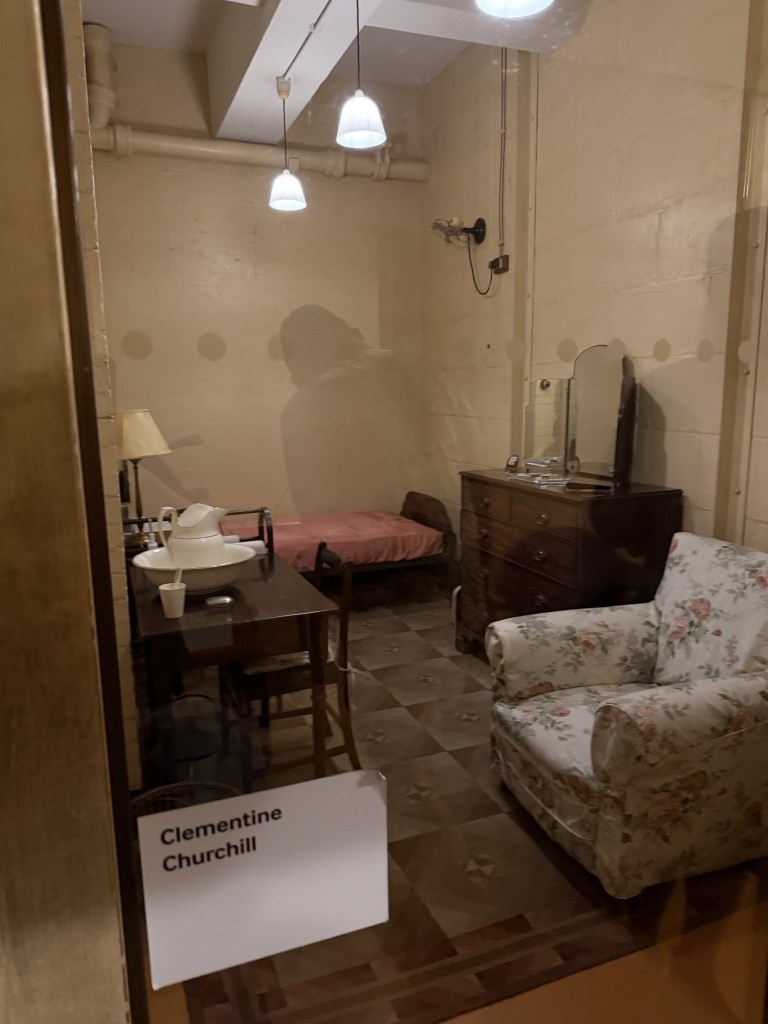
It’s these little details that make the whole place feel so real — you’re reminded that actual people, with actual quirks and habits, lived entire lives down there.
If you’re planning a London trip, this one is an easy yes, even if you don’t think of yourself as a “history person.” It’s not a huge time commitment — you can comfortably do it in a couple of hours — but it’s one of those experiences that sticks with you long after you’ve walked back out into the daylight. Between the preserved rooms and the museum’s look at Churchill’s life, you leave feeling like you actually understand the man and the moment, not just the highlight reel.
My advice: book your tickets ahead of time through the Imperial War Museums website, give yourself enough time to actually read the little placards instead of rushing through, and if you can, add on the guided tour — it fills in even more of the stories that make this place so unforgettable.
This one earns its spot on your London itinerary, no question.
*we were invited to facilitate a feature, all opinions are our own*




Leave a Reply