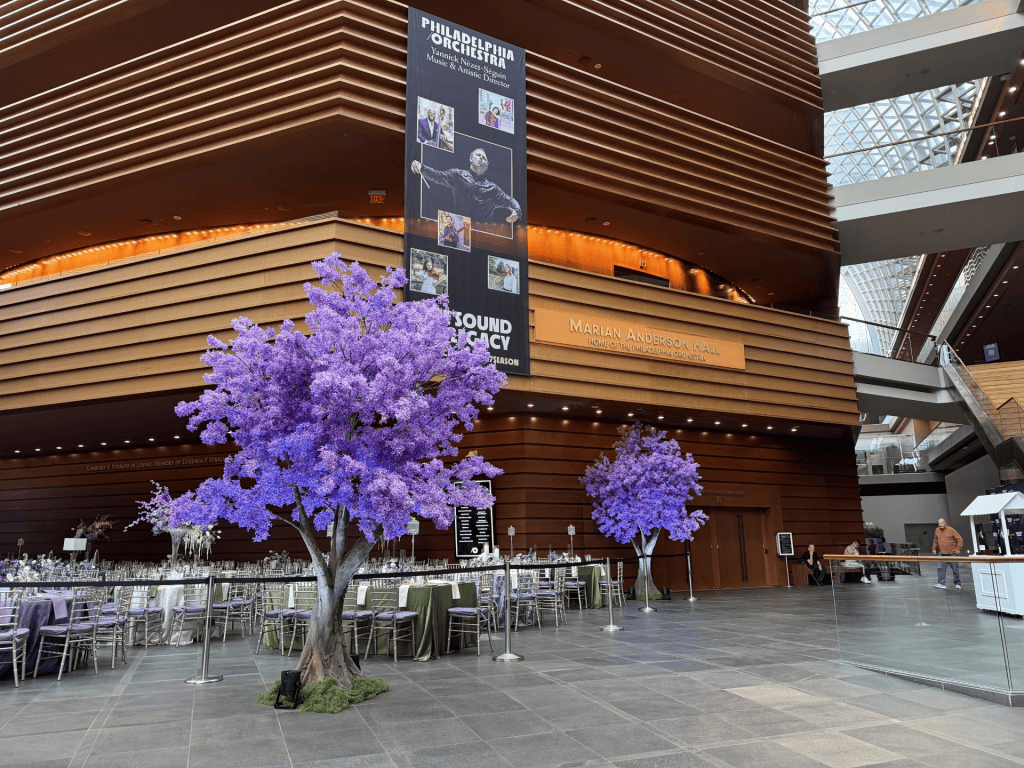
Beethoven’s Ninth Symphony crushed the will of many great composers who came after him. Schubert, Berlioz, Brahms, Wagner, Bruckner, and Mahler all had to wrestle with the difficult question: How does one write a symphony after such an epic triumph?
This work needs no real introduction. Written in spite of Beethoven’s profound hearing loss, this sweeping, bombastic, glorious, and powerful work builds toward an ultimate finale that elevates the optimism, hopes, and joy of the audience. It has never been matched in its genre for popularity and power.
The symphony’s choral component, based on German poet Friedrich Schiller’s Ode to Joy, offers an intricately woven tapestry of sound that calls for freedom, equality, and unity.
If you have not heard this work, it is unlikely that you listen to much classical music. It is as recognizable within its genre as Michael Jackson’s Thriller is at Halloween or Mariah Carey’s All I Want for Christmas Is You is in December.
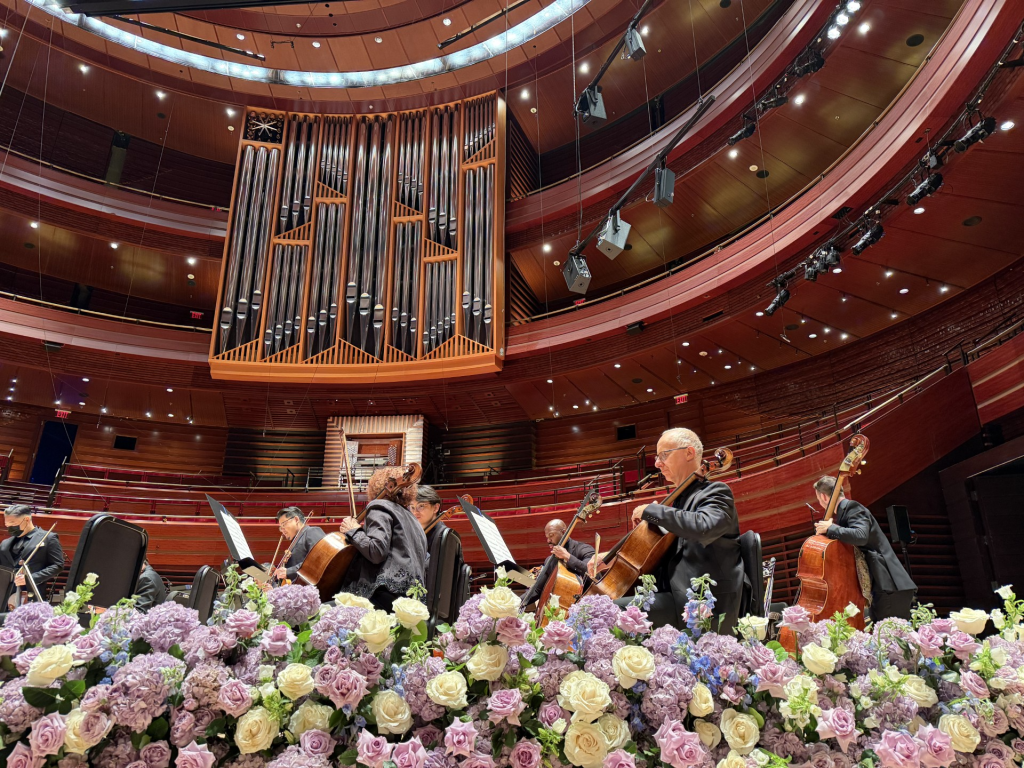
This evening’s performance was also a benefit concert for the Musicians’ Retirement Fund. The orchestra and staff generously donated their earnings to help support those who have contributed to the arts over the years.
The crowd enthusiastically welcomed Yannick Nézet-Séguin back for his 15th season as the Philadelphia Orchestra’s Music and Artistic Director. Few conductors command the respect of both an audience and an orchestra the way Nézet-Séguin does, and I was clearly not the only person in the audience who felt this way.
Yannick’s season-opening address shared his desire for the season to bring hope, emotion, and fun. He pointed out that Beethoven’s Ninth was all about unity and seeing what brings us together—that it is greater than what separates us.
Tonight’s soloists included Metropolitan Opera soprano Leah Hawkins, Grammy-winning artists J’Nai Bridges and Ryan Speedo Green, along with tenor Issachah Savage.
The concert began with a companion piece composed by the Philadelphia Orchestra’s composer-in-residence since 2025, Joe Hisaishi. Hisaishi is perhaps most famous for his scores for Studio Ghibli films such as Spirited Away, The Boy and the Heron, and Princess Mononoke.
Hisaishi wrote Orbis on commission for the 25th anniversary of the annual “Suntory Presents Beethoven’s Ninth with a Cast of 10,000,” performed in 2007 in Osaka, Japan. And let me just say: the nearly 100 souls of the Philadelphia Symphonic Choir, combined with this evening’s soloists, provided more than enough power to engage the audience at what I would consider the maximum comfortable volume. I cannot imagine what it must have been like to hear 10,000 musicians performing this piece.
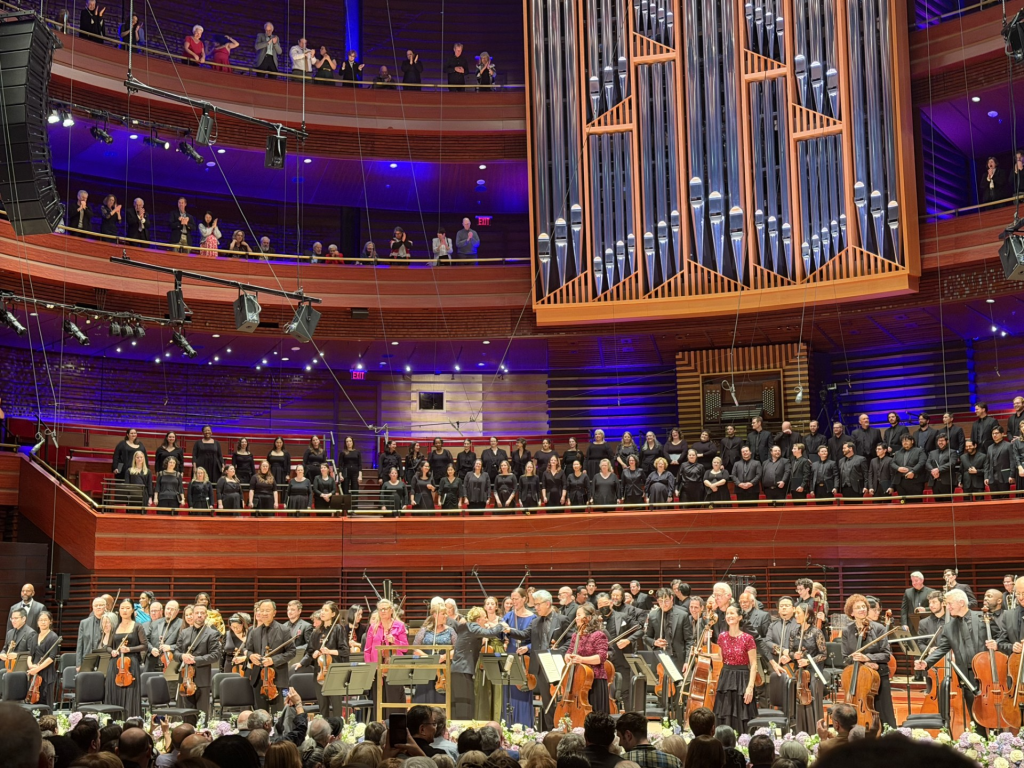
Orbis means “circle” or “connection” in Latin. Hisaishi brought together the orchestra and choir used for the symphony with his own organ flourishes—drawing, perhaps, on his years as a concert pianist—to create a work about connection, life, and existence.
It proved to be a worthy prelude to Beethoven’s Ninth, moving between contemplative choral music echoing early choral harmonies, powerful organ solos, and crescendoing, bright, staccato-like harmonies. It captured the joy of many of his other movie-score moments of wonder and awe. I had no idea what to expect and could not have been more pleased with the piece. I left the concert and immediately looked for a recording.
The symphony immediately followed without intermission. Between the pieces, the stagehands removed the conductor’s podium. This proved to be an omen of the type of performance we would experience. The orchestra performed with surgical precision, as though they knew the piece inside and out, yet Yannick’s direction adjusted the dynamic emphasis in incredibly subtle ways that made the entire work feel new.
How did he accomplish this? Primarily by having the strings use very heavy bowing with the timpani strikes. In the higher register, they shot the bows off the strings with a rapid flourish that seemed emphatic.
The whole piece felt like it was in a pressure cooker ready to explode, until it was finally allowed to do so. In the moments when it boiled over during the early sections, it still felt as though it was being restrained.
It was as though Yannick decided to walk the line between genius and madness in this performance. If I were to guess, he aimed to channel or recreate the experience of the original audience listening to Beethoven demand everything from his musicians before his demise. It was a bit mad, in all the right ways.
Did the soloists even have time to breathe? Because I forgot how to during multiple parts of the piece.
This seeming violent repression made the finale cathartic as all restraints came off and the music erupted like Mount Tambora, which caused a cataclysmic shift in worldwide climate for a season.
This left me to wonder: Will the remainder of the season be overshadowed by such a performance—one that I believe transported the audience back to Vienna, Austria, at the Theater am Kärntnertor on May 7, 1824? Did we just witness the next evolution of Yannick in his musical career? Will he continue to try to recreate the music from what we know about the composers’ frame of mind and state during its inception?
I sure hope so.
Visit the Philadelphia Orchestra and see for yourself. Or listen to their concert web broadcasts on WRTI Sunday afternoons, or through music streaming services such as Apple Music or Spotify.
*we were invited to facilitate a feature, all opinions are our own*



Leave a comment